
Air Spring Types Guide for Auto Parts Buyers
This guide explains how air springs are built, the major design types available, and how to choose the right aftermarket air suspension solution based on vehicle compatibility and performance requirements.
Introduction
Air suspension systems have become standard equipment in modern passenger cars, luxury vehicles, buses, and commercial fleets. For auto repair shops, distributors, and wholesale buyers, understanding the structure and types of air springs is essential for selecting the right OE replacement parts and advising customers with confidence.
This guide explains how air springs are built, the major design types available, and how to choose the right aftermarket air suspension solution based on vehicle compatibility and performance requirements.
—
## What Does an Air Spring Look Like?
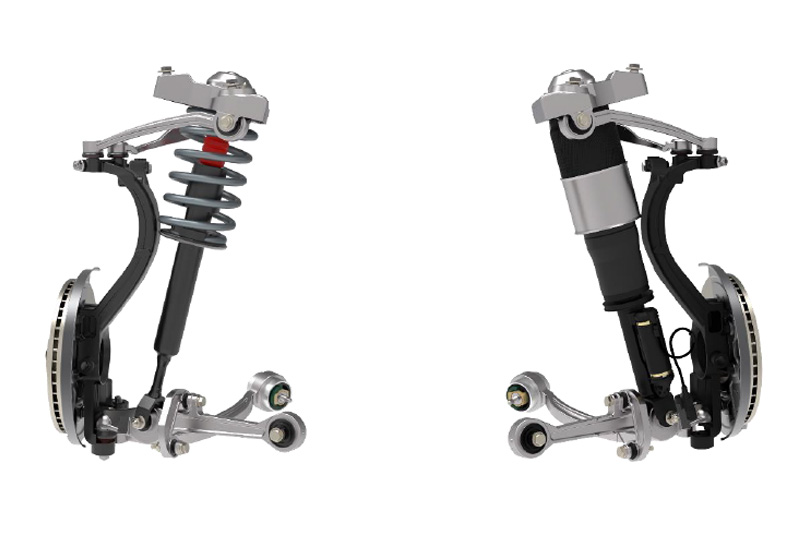
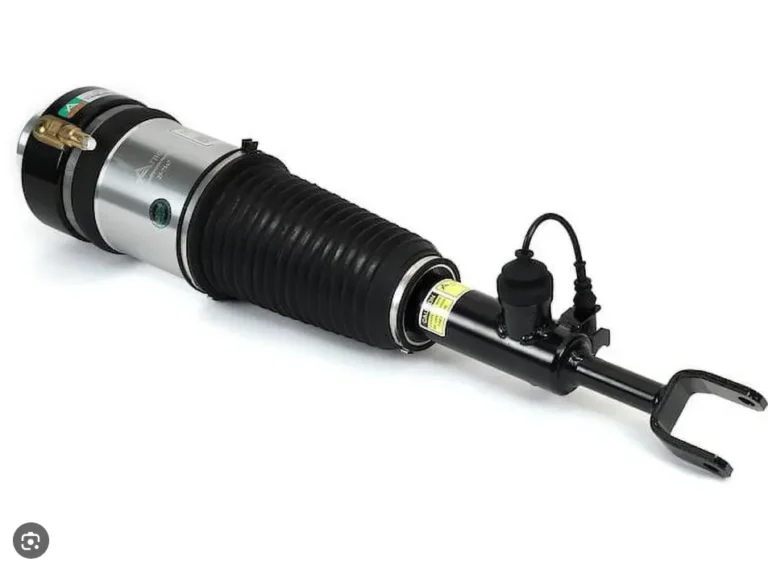
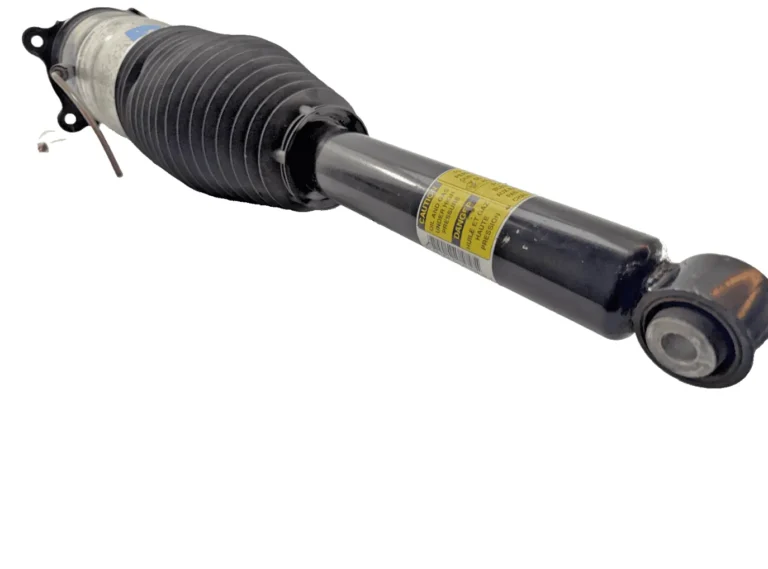
An **air spring** is a non-metallic suspension component that uses compressed air to provide elasticity and load support. Instead of steel coils, the system relies on a reinforced rubber air bladder sealed with pressurized air.
Typical shapes include:
– Cylindrical
– Drum-shaped
– Bellows-style
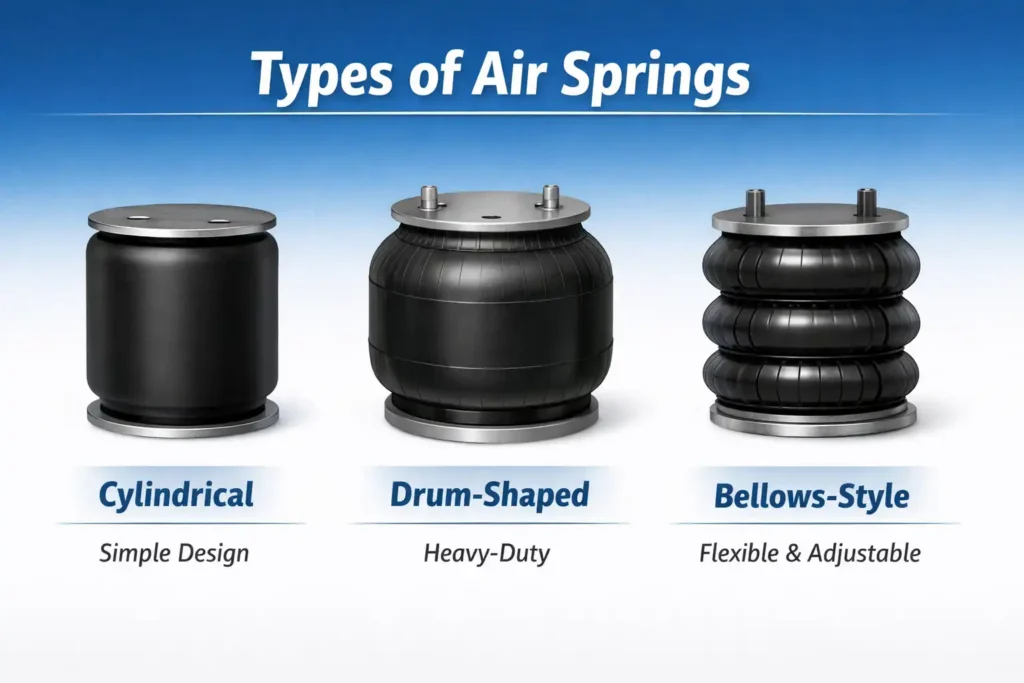
Although designs vary between front and rear suspension applications, most air springs share the same core components.
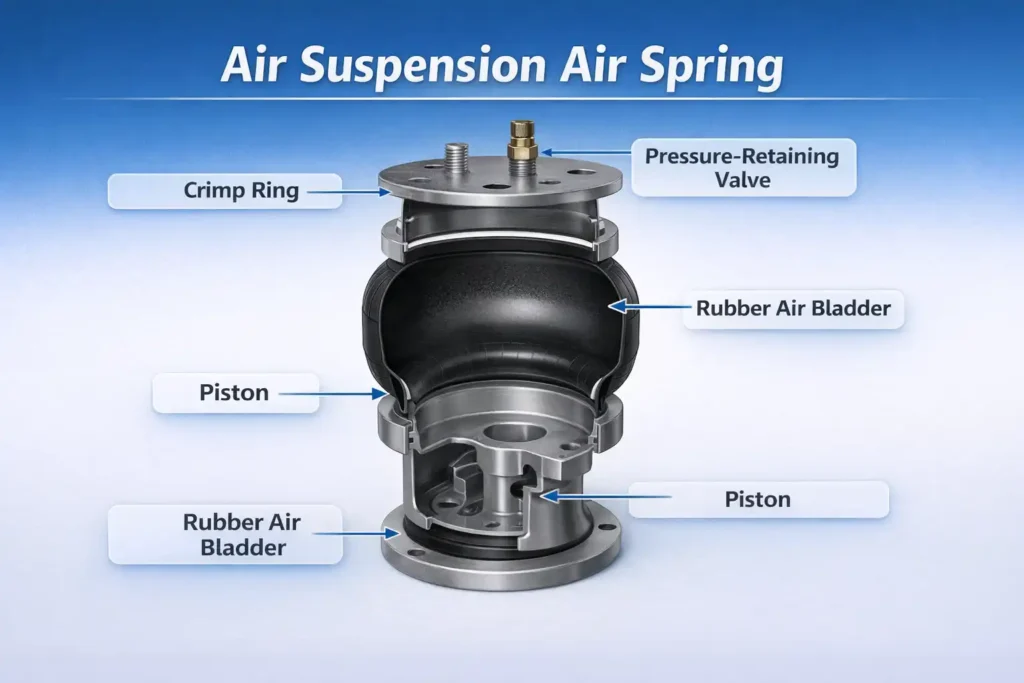
### Key Components of an Air Spring
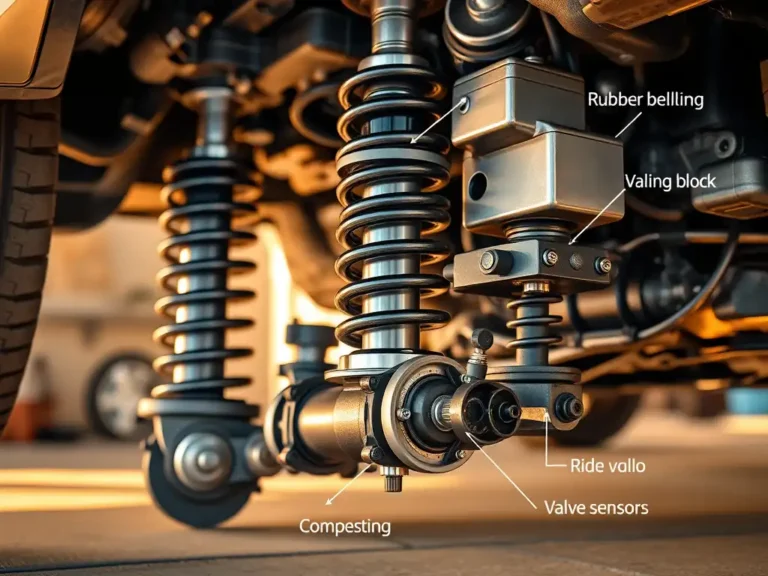
Every air suspension air spring includes several critical parts:
– **Rubber air bladder** – flexible chamber holding compressed air
– **Piston** – controls air volume and spring characteristics
– **Crimp ring** – seals the bladder to metal components
– **Pressure-retaining valve** – maintains internal air pressure
Understanding these components helps buyers evaluate aftermarket parts quality and durability.
—
## Major Types of Air Springs
Air springs can be classified based on **air chamber structure** and **number of chambers**. Both factors directly influence ride comfort, stiffness, and vehicle compatibility.
—
## Air Spring Types by Structural Design
### 1. Bladder-Type Air Springs
Bladder-type air springs are constructed using multiple layers of rubber air bags reinforced with cord fabric. Elastic deformation occurs through the flexing of the rubber chambers.
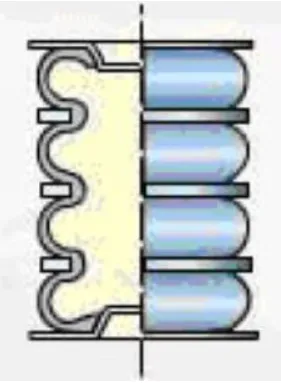
These are commonly used in:
– Heavy-duty trucks
– Commercial vehicles
– Buses
#### Key Characteristics
**Advantages**
– Lower installation height due to no bottom piston
– Excellent load-bearing capacity
– Ideal for heavy-duty aftermarket parts demand
**Performance Features**
– Larger change in effective bearing area during operation
– Higher spring stiffness
– Higher natural vibration frequency
Bladder air springs can be further divided into:
– Single-curved
– Double-curved
– Multi-curved designs
More curved sections improve elasticity but slightly reduce sealing performance.
For distributors supplying commercial fleets, bladder-type air springs are a core product category.
—
### 2. Diaphragm-Type Air Springs
Diaphragm air springs use a rubber diaphragm combined with metal components. Instead of stretching, the rubber bladder **rolls or curls** during compression.
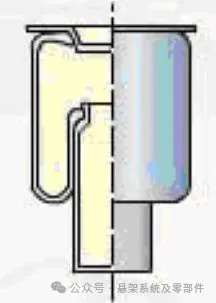
This design is widely used in:
– Passenger cars
– SUVs
– High-speed rail applications
#### Why Diaphragm Air Springs Are Popular
**Lower stiffness**
– Smaller change in effective air chamber area
– Reduced vibration frequency
– Improved ride comfort
**Compact design**
– Ideal for vehicles with limited suspension space
**Optimized nonlinear behavior**
By modifying piston shape and increasing air storage volume, manufacturers achieve more precise suspension control.
Because of their simpler structure, diaphragm air springs are well suited for **mass production and OE replacement markets**.
For wholesalers targeting passenger car repair shops, diaphragm air springs represent a high-volume product segment.
—
### 3. Composite Air Springs
Composite air springs combine bladder and diaphragm design principles to balance performance characteristics.
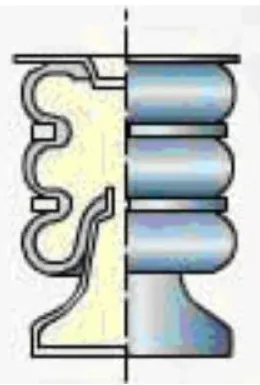
They provide:
– Long suspension travel
– Lower stiffness
– Improved comfort
However, the more complex structure can reduce long-term reliability compared to simpler designs.
Typical applications include:
– High-end buses
– Special-purpose vehicles
– Premium transport solutions
These products are often requested by distributors serving niche or luxury markets.
—
## Air Spring Types by Number of Chambers
Another critical classification is based on **air chamber configuration**. The number of chambers determines how suspension stiffness and ride height are controlled.
—
### 1. Single-Chamber Air Springs
Single-chamber air springs feature one air cavity and a straightforward design.
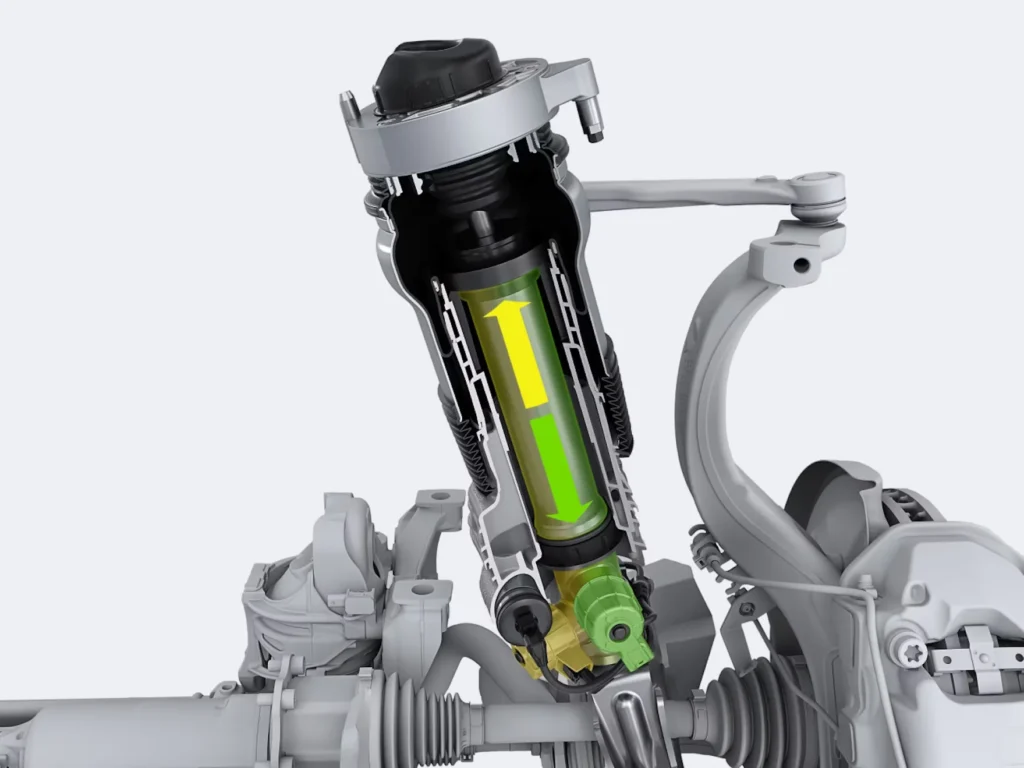
**Key Benefits**
– Low production cost
– Simple installation
– Reliable performance
**Limitations**
– Limited stiffness adjustment range
These are widely used in:
– Standard passenger vehicles
– Entry-level air suspension systems
They remain one of the most common aftermarket auto parts for replacement markets.
—
### 2. Dual-Chamber Air Springs
Dual-chamber air springs divide the main air chamber into two sections using an electromagnetic valve.
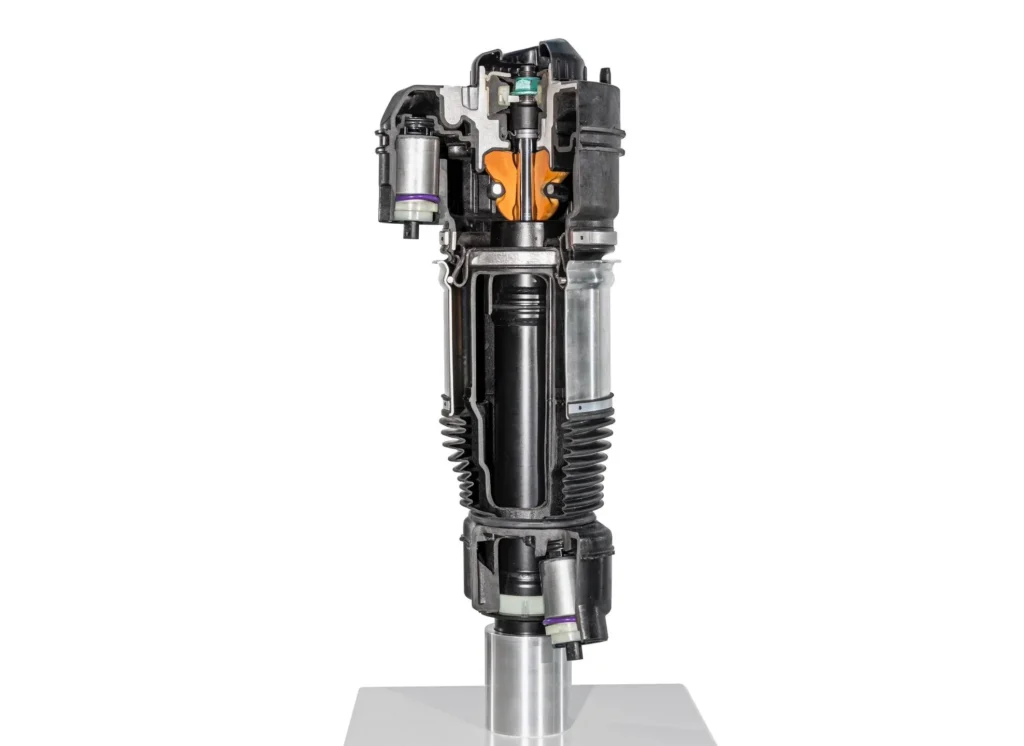
This allows switching between driving modes:
– Comfort mode
– Sport mode
#### Why They’re Popular in Modern Vehicles
– Wide stiffness adjustment range
– Better ride comfort and handling balance
– Excellent cost-performance ratio
These air springs are commonly found in **mid-range and premium vehicles**, making them an important segment for wholesale auto parts suppliers.
—
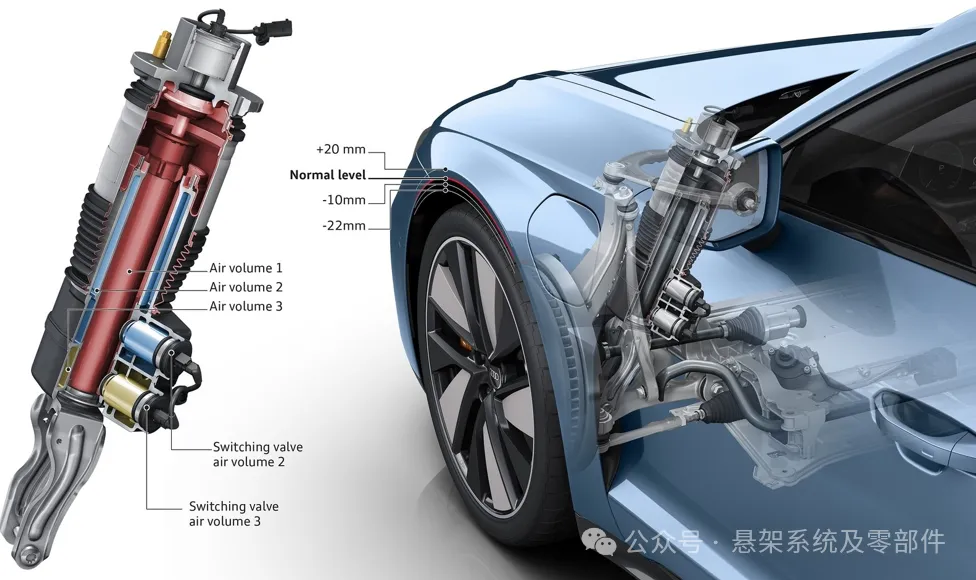
### 3. Multi-Chamber Air Springs
Three-chamber or multi-chamber air springs represent the most advanced air suspension technology.
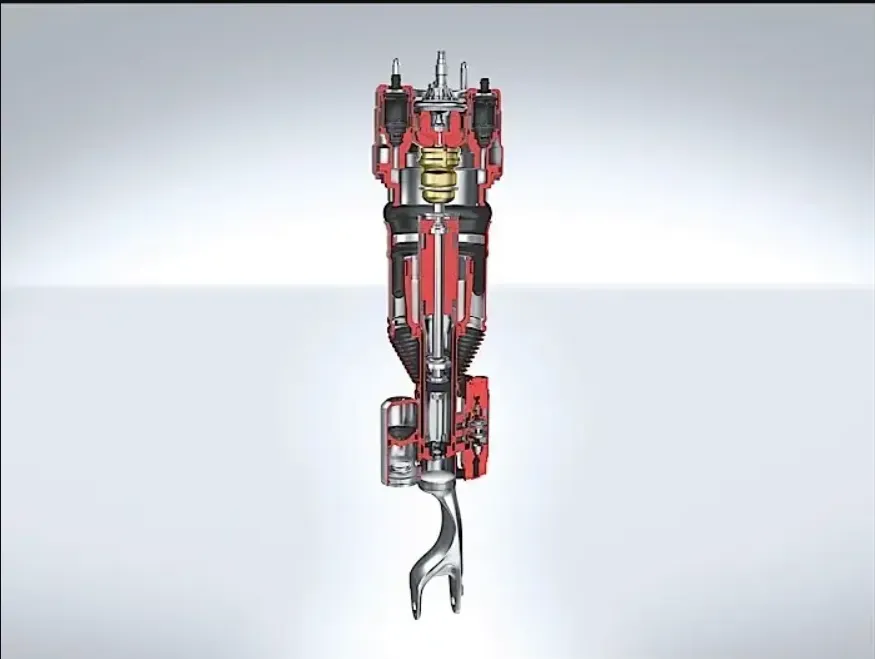
Using high-speed solenoid valves, they enable:
– Multi-stage stiffness control
– Precise ride height adjustment
– Active suspension integration
Typical applications:
– Luxury sedans
– High-end SUVs
– Advanced active suspension systems
– Precision equipment support
By adjusting the air volume of each chamber, the suspension system delivers multiple stiffness levels for superior ride control.
These products are in growing demand as luxury vehicle ownership increases worldwide.
—
## Choosing the Right Air Spring for Your Market
Selecting the right air spring type requires balancing three key factors:
### Load Requirements
Heavy-duty vehicles benefit from **bladder-type air springs** designed for higher load capacity.
### Space Constraints
Passenger cars typically require **compact diaphragm air springs**.
### Functional Complexity
Luxury vehicles and advanced suspension systems demand **dual or multi-chamber solutions**.
In practice, these classifications are often combined.
For example, a **dual-chamber diaphragm air spring** provides both compact design and adjustable stiffness.
This hybrid design has become a standard solution in modern air suspension systems.
—
## Why Air Springs Are a High-Demand Aftermarket Product
Global vehicle fleets are rapidly aging, increasing demand for **OE replacement air suspension components**.
For distributors and repair shops, air springs offer:
– High replacement frequency
– Strong profit margins
– Consistent global demand
Stocking reliable aftermarket parts ensures better service for customers and improved long-term business growth.
—
## Conclusion
Air springs play a critical role in modern suspension systems, delivering comfort, load stability, and performance. Understanding the differences between bladder, diaphragm, composite, and multi-chamber designs helps buyers select the right products for their markets.
As air suspension adoption continues to grow, the demand for high-quality OE replacement air springs will only increase.
**Looking for a reliable air suspension parts manufacturer or wholesale supplier? Contact us for catalog and pricing.**


一条评论