Xiaomi SU7 Air Suspension Aftermarket Guide
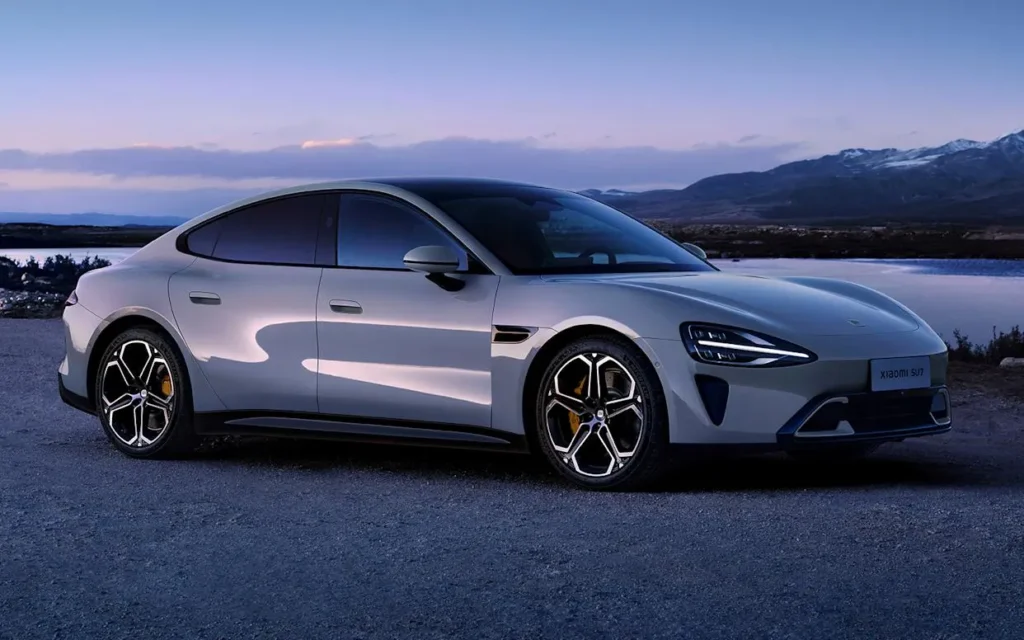
The Xiaomi SU7 is one of the most talked-about electric sedans entering the global market. Designed with luxury-level ride comfort and advanced chassis engineering, the vehicle uses a modern air suspension system that will inevitably require maintenance, repair, and OE replacement parts as mileage accumulates.
Introduction
The rapid growth of electric vehicles (EVs) is reshaping the global automotive aftermarket. Among the newest entrants, the Xiaomi SU7 has generated strong interest thanks to its premium positioning, advanced chassis technology, and factory-installed air suspension system.
For auto repair shops, distributors, and wholesalers, understanding the suspension architecture of emerging EV models is essential. Early technical knowledge helps workshops diagnose failures faster, stock the right aftermarket parts, and secure new business opportunities as these vehicles enter the service cycle.
This guide breaks down the Xiaomi SU7 suspension system from an aftermarket perspective, including technical specifications, expected failure points, repair vs. replacement considerations, OE replacement opportunities, and long-term parts demand.
Why EV Suspension Systems Are Becoming More Advanced
Modern EVs place unique stress on suspension systems compared to internal combustion vehicles.
Increased Vehicle Weight
Battery packs significantly increase vehicle mass. This results in:
- Higher load on air suspension air springs
- Greater stress on shock absorbers and compressors
- Increased wear on control arms and bushings
As a result, manufacturers are turning to air suspension systems to maintain ride comfort and vehicle stability.
Rising Consumer Expectations
Premium EV buyers expect:
- Smooth ride comfort
- Adjustable ride height
- Smart driving modes
- Luxury vehicle handling
Air suspension is now a key feature in premium electric sedans, creating strong future demand for aftermarket parts and OE replacement components.
Xiaomi SU7 Suspension System Overview
Understanding the OEM configuration helps repair shops prepare for future service demand.
Suspension Architecture
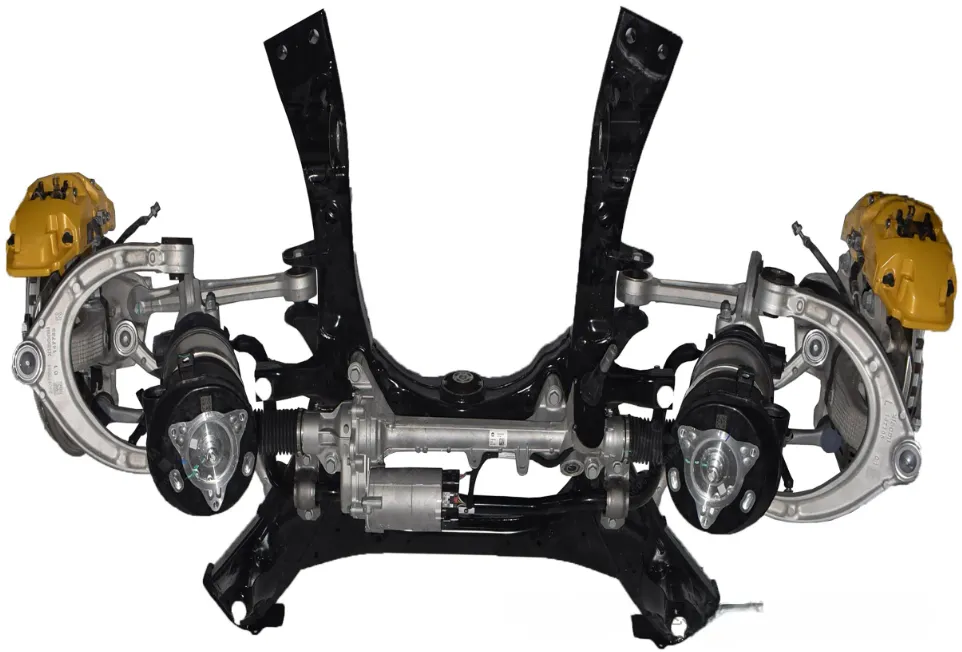
Front Suspension
- Double wishbone independent suspension
- Optimized for precise steering and cornering stability
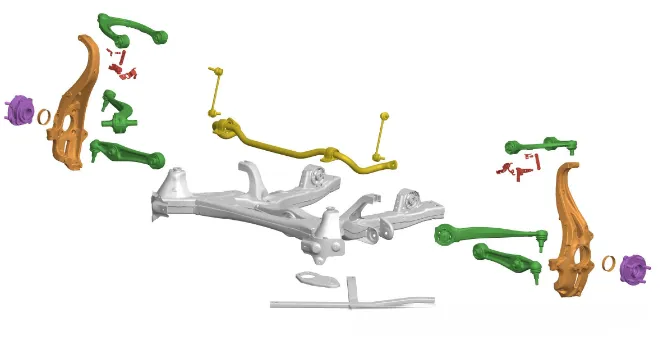
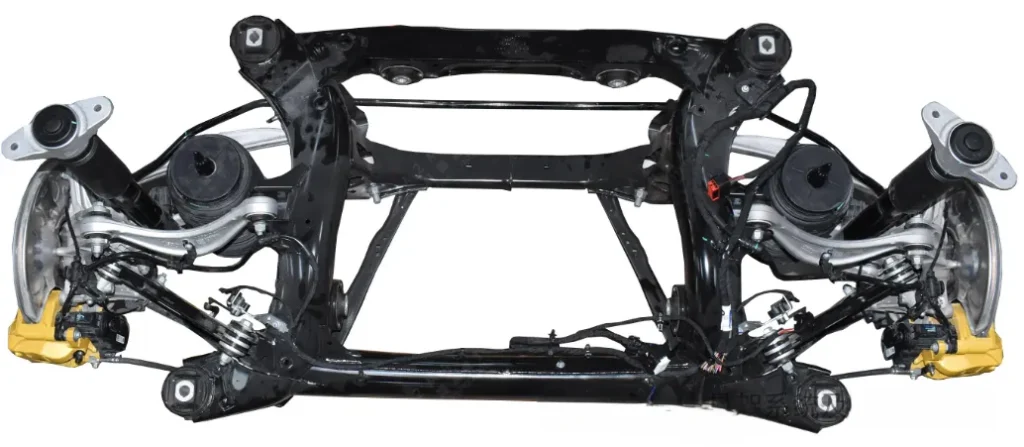
Rear Suspension
- Five-link independent suspension
- Designed to support EV battery weight and enhance ride comfort
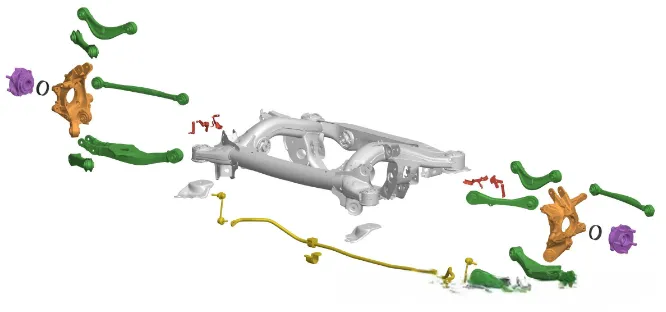
This layout is typical of high-end luxury vehicles and indicates long-term aftermarket potential.
Suspension Component Materials
Material selection directly impacts durability and service life.
Front Suspension
- Predominantly aluminum alloy construction
- Lightweight for improved handling and efficiency
Rear Suspension
- Upper and lower control arms: aluminum alloy
- Additional links: stamped steel
Subframes
- Steel construction
- Front subframe uses double-layer stamped steel for added rigidity
For the aftermarket industry, mixed-material construction means replacement demand will grow as vehicles age, particularly in harsh climates.
OEM Suppliers and Aftermarket Opportunities
Understanding OEM suppliers helps distributors position compatible OE replacement solutions.
Key component suppliers include:
- Air suspension system: Tuopu Group
- CDC shock absorbers: ZF
- Air springs: Tuopu Group
- Air tanks: Likely Baolong Technology
For wholesalers and distributors, this confirms the vehicle uses industry-standard air suspension architecture, making aftermarket replacement viable and scalable.
Technical Highlights of the Air Suspension System
Ride Height Adjustment
The Xiaomi SU7 features adjustable ride height:
| Mode | Ground Clearance |
| Lowest | 114 mm |
| Standard | 134 mm |
| Highest | 164 mm |
Adjustment range: -20 mm to +30 mm
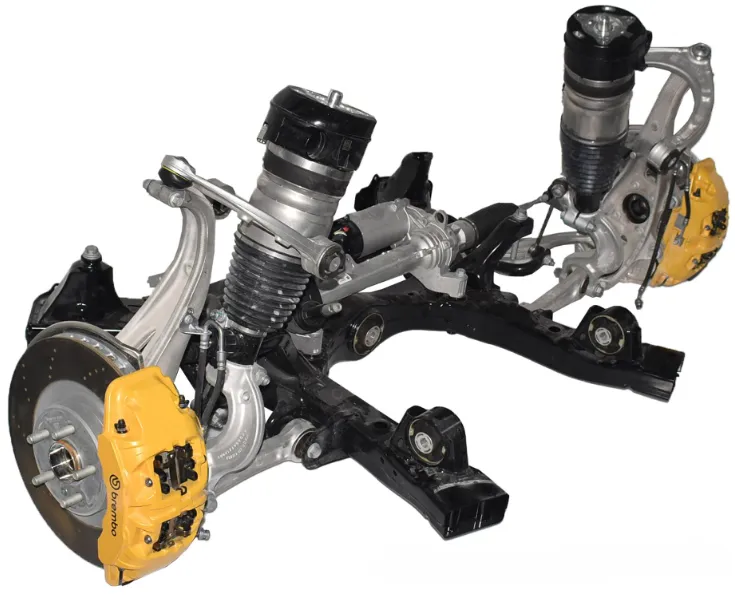
This feature increases wear on:
- Air springs
- Compressors
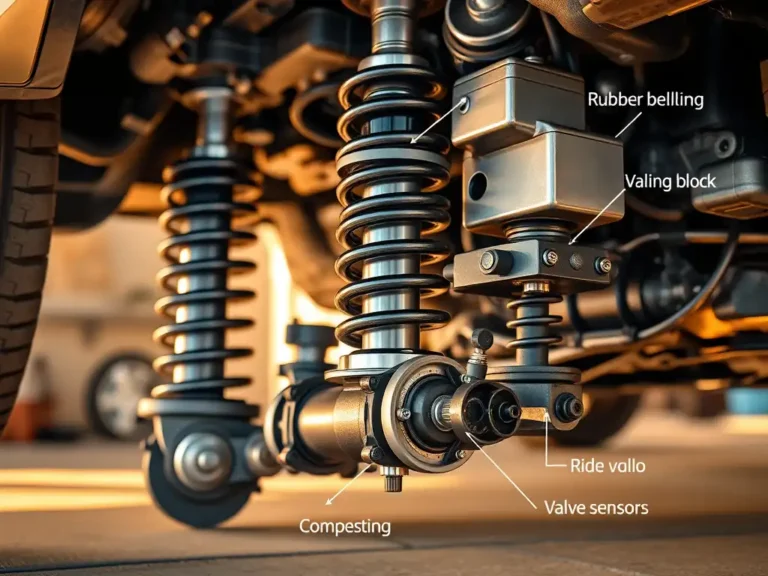
- Valve blocks
These are key high-demand aftermarket parts.
Driving Mode Adaptability
The suspension automatically adjusts stiffness:
Sport Mode
- Firmer damping
- Better handling and stability
Comfort Mode
- Softer damping
- Improved ride comfort
Frequent stiffness changes increase system cycling, which accelerates air spring fatigue and compressor wear over time.
Expected Air Suspension Failures (Aftermarket Insights)
Air suspension systems typically begin showing failures between 70,000–100,000 miles, the above number could be reduced low to 50-70% due to the cold temperature impact.
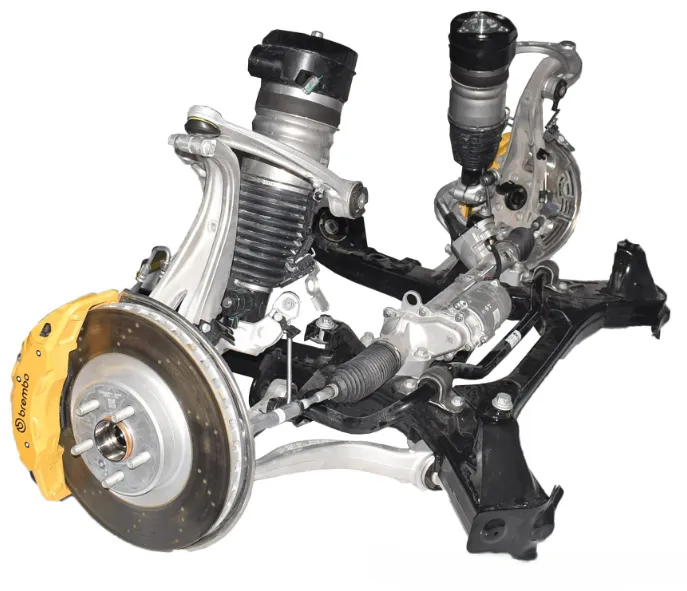
Common failure points include:
Air Spring Leakage
Symptoms:
- Vehicle leaning overnight
- Uneven ride height
- Suspension warning light
Rubber air bladders degrade due to:
- Temperature changes
- Road debris
- Continuous pressure cycles
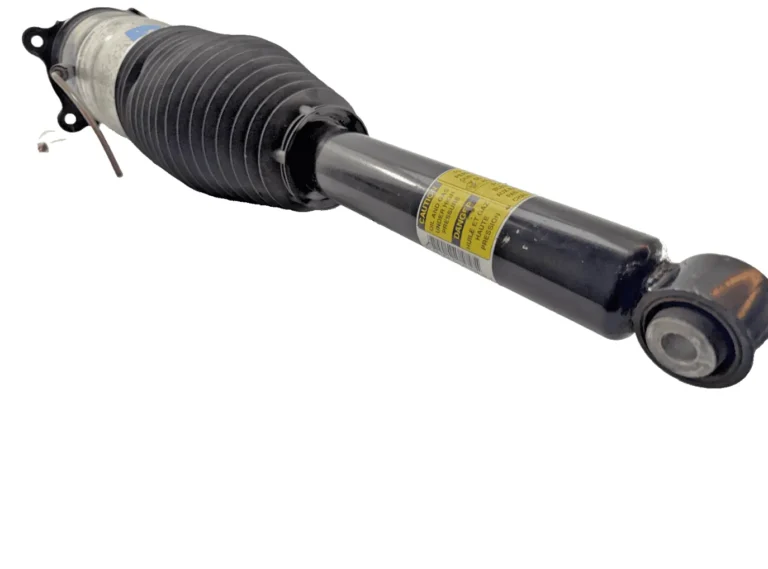
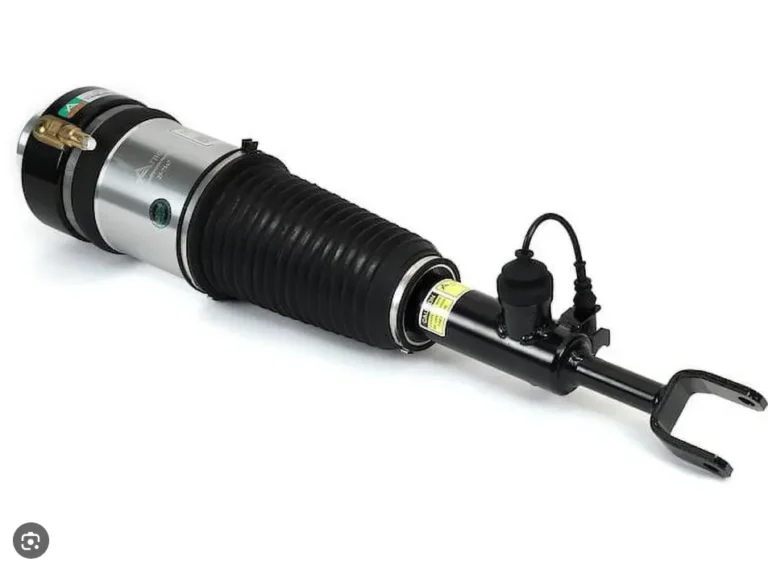
This creates strong demand for aftermarket air suspension air spring replacement.
Compressor Wear
Signs of failure:
- Compressor running constantly
- Slow vehicle lift
- Suspension fault messages
Compressors typically fail due to overwork caused by leaking air springs.
Valve Block and Sensor Issues
Common problems include:
- Incorrect ride height readings
- Suspension stuck in one mode
- Intermittent warning lights
These issues require diagnostic expertise and replacement parts availability.
Repair vs Replace — What Workshops Should Know
Repair shops often face the question: repair or replace?
Repair May Be Viable When:
- Leak is small and detected early
- Compressor still functioning properly
- System has low mileage
Replacement Recommended When:
- Air spring rubber shows aging cracks
- Compressor has excessive runtime
- Vehicle exceeds 80,000 miles
Most workshops prefer full OE replacement air spring installation for reliability and warranty purposes.
Air Suspension Replacement Cost Expectations
Estimated repair costs for EV luxury sedans:
| Component | Typical Replacement Cost |
| Air spring | $350–$900 per unit |
| Compressor | $500–$1,200 |
| Valve block | $250–$600 |
Labor time:
- Air spring replacement: 2–3 hours per axle
This makes air suspension one of the most profitable repair categories for workshops.
Why Aftermarket Air Suspension Parts Matter
For distributors and wholesalers, the Xiaomi SU7 represents new market demand.
Benefits of aftermarket OE replacement parts:
- Lower cost than OEM
- Faster availability
- Comparable durability
- Expanded profit margins
Global repair shops are actively seeking reliable aftermarket suppliers as EV adoption increases.
Vehicle Compatibility & Future Demand
The Xiaomi SU7 signals a wider trend:
Luxury EVs are adopting air suspension as standard equipment.
This means:
- Growing replacement demand within 3–5 years
- Increased global parts distribution opportunities
- Rising need for wholesale air suspension inventory
Early market entry gives distributors a major advantage.
Conclusion
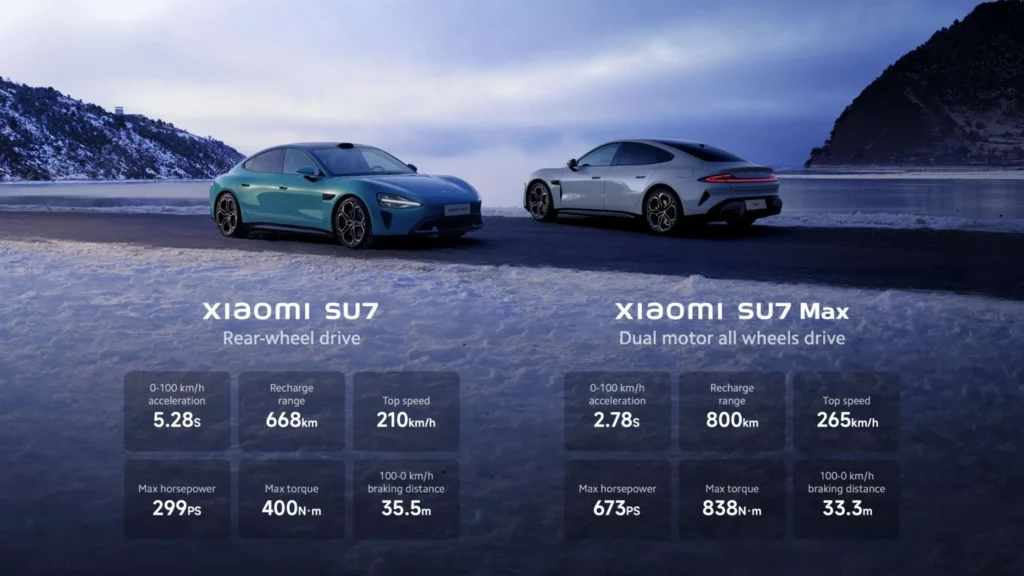
The Xiaomi SU7 showcases how modern EVs are accelerating demand for advanced air suspension systems. While the technology delivers excellent comfort and handling, it also introduces long-term maintenance and replacement needs.
For auto repair shops, distributors, and wholesalers, this creates a valuable opportunity to prepare inventory, expand service offerings, and build expertise in aftermarket air suspension air spring OE replacement solutions.
The EV aftermarket is only beginning — and air suspension components will be one of its fastest-growing categories.
FAQ
How long do air suspension air springs last?
Most air springs last between 70,000 and 100,000 miles depending on climate and driving conditions.
Is aftermarket air suspension reliable?
High-quality aftermarket OE replacement parts can match OEM durability when manufactured to strict quality standards.
What are the first signs of air suspension failure?
Common symptoms include vehicle sagging, compressor noise, warning lights, and uneven ride height.
H3: Should air suspension be repaired or replaced?
Replacement is usually recommended once components show aging or repeated failure to ensure long-term reliability.